A Tale of Two HVAC Business Owners: The AI Decision That Changed Everything
 Talan Wright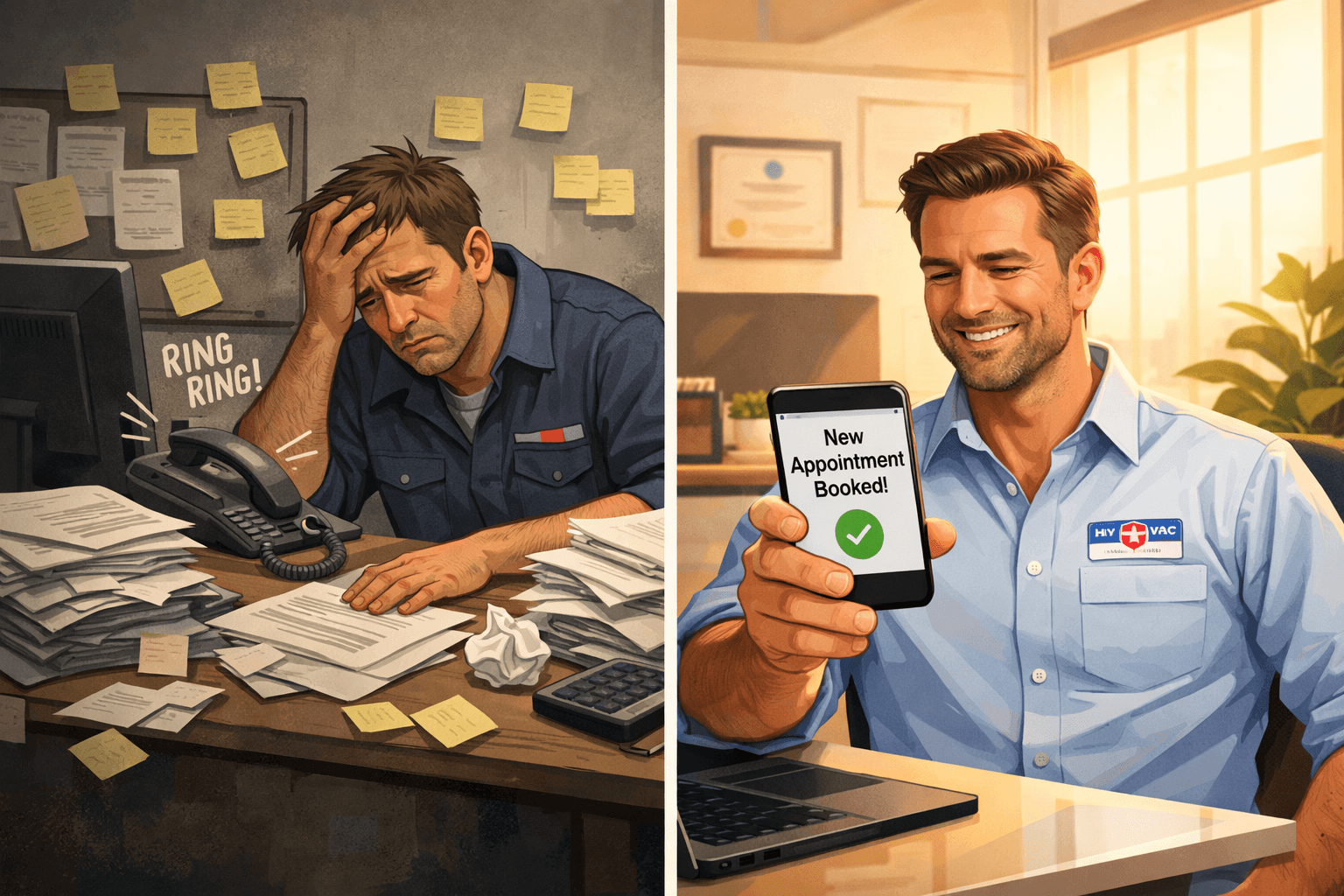
A Tale of Two HVAC Business Owners: The AI Decision That Changed Everything
Let's play a scenario game.
Meet Mike and Dave. Both own HVAC companies in the same city. Same number of trucks. Same revenue - around $1.2
million a year. Same headaches.
It's 2026, and they're both hearing about AI and automation. One decides to invest. The other thinks it's a fad.
Let's see how their stories unfold.
---
Scenario 1: The Missed Call
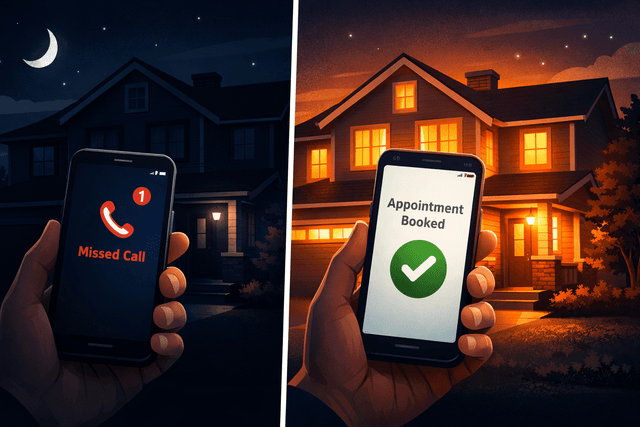
Friday, 6:47 PM. A homeowner's AC stops blowing cold air. They call both companies.
Dave's company (No AI): Voicemail. "We're closed. Leave a message and we'll call you back Monday."
Mike's company (AI Voice Agent): The AI answers on the first ring. It books a service call for Monday morning, sends
a confirmation text, and adds the job to the schedule automatically.
Result: Mike gets a $280 service call. Dave calls back Monday, but the customer already has an appointment with Mike.
One missed call. Not a big deal, right?
Except it happens 2-3 times a week. That's $25,000-$35,000 a year in service calls walking out the door.
---
Scenario 2: The Follow-Up That Never Happened
3 months later. Both companies gave out around 60 estimates for system replacements this quarter.
Dave's company: His guys are running calls all day. Following up on old estimates keeps getting pushed to "tomorrow."
After 2 weeks, most leads have either gone with someone else or stopped responding. Maybe 4-5 circle back on their
own.
Mike's company: His AI sends a follow-up text 3 days after every estimate. Then another a week later. It answers
basic questions and books callbacks when people are ready. He closes 3 extra system replacements this quarter that
would have gone cold - about $22,000 in revenue he would've lost.
---
Scenario 3: The Saturday Morning Emergency
It's July. An AC stops working at 7 AM on a Saturday. It's already 85 degrees outside and climbing. Family with young
kids, house is heating up fast.
Dave's company: His office opens at 8. By then, the customer already found someone else on Google who answered.
Mike's company: The AI answered at 7:02 AM, got the details, and texted his on-call tech. By 7:20, the customer had a
confirmation that someone would be there by 9:30.
It's a $250 service call. But that customer tells three neighbors about the company that actually picked up.
---
Scenario 4: The Hiring Problem
2028. Dave's receptionist quits with two weeks notice.
Dave: Posts the job for 5 weeks. Hires someone at $36,000/year plus benefits. Takes a couple months to get them up to
speed. They're decent, but they take breaks, call in sick, and leave at 5.
Mike: His AI handles the routine stuff - booking, confirmations, basic questions, after-hours calls. He has a
part-time office admin for complex issues at $17/hour. Lower overhead, no coverage gaps.
---
Scenario 5: The Slow Season
2029. Mild spring. Calls are down across the board.
Dave: Slow season means slow revenue. His guys sit around waiting for the phone to ring.
Mike: His AI is texting past customers automatically. "Hey, it's been a year since your last tune-up - want to get on
the schedule before summer?" He stays busier than Dave during the same slow months, just from better follow-through
on his existing customer base.
---
Fast Forward: 2034
Dave is still running the same business. Revenue is around $1.3 million - technically up, but his costs have risen
with inflation so his margins are tighter. He still works 55-60 hours a week. He's the bottleneck for everything.
Mike has grown to $2.8 million. Not because he's a genius - he just captured more of what was already coming his way
and didn't let leads slip through the cracks. He hired a service manager last year and actually takes time off now.
When he's not there, the business still runs.
Same starting point. Different decision.
---
The Difference Wasn't Talent
Mike wasn't smarter than Dave. He wasn't luckier. He didn't work harder.
He just understood one thing:
Growth isn't always about getting more leads. Sometimes it's about stopping the leaks.
Most home service businesses lose opportunities every week to missed calls, forgotten follow-ups, and after-hours
inquiries. AI doesn't create magic - it just makes sure you don't lose what's already yours.
---
The question isn't whether you can afford to implement AI.
It's whether you can keep affording the leaks.
---
Curious how many calls your business might be missing?

About Talan Wright
Talan Wright started building AI solutions at 16. Now he's co-founder of Fenix AI, helping home service businesses automate their operations and never miss another lead. Outside of Fenix AI, he's building a personal brand around AI—sharing tips, tools, and insights to help others understand and leverage automation in their businesses.